Peptide Association LLC is a for-profit company. We receive compensation from the clinical providers listed on this site. We are not an accrediting body, a licensing board, or a government-affiliated organization. See exactly how we make money.
About the Peptide Association
We answer to the people taking the peptides.
The Peptide Association is a members’ association for people using peptide therapy. Members are patients. Clinicians and pharmacies are partners who serve them. We are a for-profit company, some of those partners pay us, and this page is where we tell you which parts of that arrangement work in your favour and which do not.
Why we exist
Most organisations with “Association” in the name are trade bodies. Their members are the professionals, and their job is to represent them. We are the other kind, closer to a consumers’ union than to a medical board. Our members are the people considering or already taking peptides, and everything on this network is written for them first.
That distinction decides real things. It is why a compound profile opens with its regulatory status rather than a way to buy it. It is why a clinician evaluates you and decides what, if anything, to prescribe, instead of signing off a protocol you arrived with. And it is why we deleted purchase paths from most of our own compound pages once we could no longer defend them.
Peptide therapy is genuinely promising and genuinely messy. People dose themselves from forum threads, compounding rules differ by state and change mid-year, and the loudest voices in the category are usually selling something. We cannot fix that by claiming authority we do not hold. What we can do is take one side consistently, show our work, and let you check it.
What we are, and what we are not
The right-hand column is the one worth reading. Several of those lines used to appear on this site as claims.
We are
- A members' association. Our members are the people taking peptides, not the people prescribing them.
- A for-profit company: Peptide Association LLC.
- A publisher: 265 compound profiles, each led by its regulatory status.
- A route to licensed clinicians, who make every prescribing decision themselves.
We are not
- An accrediting, certifying, or credentialing body. We review licensure; we do not grant it.
- A licensing board or a government-affiliated organisation.
- Independent or impartial. We are paid by providers we refer members to.
- A pharmacy. We do not prescribe, dispense, or sell peptides.
Who pays us
Three lines: we receive compensation from the clinical providers we route members to, we sell memberships, and we sell flat-fee sponsorships to pharmacies and suppliers. The first one has a conflict built into it, because we are paid when you become someone’s patient. We would rather name that than let you find it.
The full accounting, every revenue line marked aligned or conflicted, and the list of decisions that cost us money, is on one page: how we make money.
What we actually check
Not standards we set, not badges we award. These are the literal procedures, described plainly enough that you can tell us when we have missed one.
01
We look clinicians up in the CMS registry
Every clinician applying to the network is checked against the CMS National Provider Identifier registry: active NPI status, state medical licenses, and clinical specialty. Applications are also reviewed for peptide therapy experience before network standing is granted.
02
We only show a way to buy where one lawfully exists
A consultation or pharmacy link appears on a compound profile only where that compound is FDA-approved or lawfully compoundable under 503A. Every other profile shows its regulatory status instead of a purchase path. That rule removed the majority of our own conversion points.
03
We name the compensation at the link, not in the footer
Where a link sends you to a provider who pays us, the disclosure sits next to the link, at the same size as the surrounding text, before you click it.
04
We put a name on clinical content
Compound profiles, protocols, and education carry a named medical reviewer and a link to the editorial policy that governs how they are written and corrected.
None of that is accreditation, and we no longer describe it as such. It is a set of checks. If you find a claim on this network we cannot support, tell us and we will either source it or remove it.
Who runs it
The people behind the Association
An association is only as accountable as the people willing to put their names on it. These are ours.

Jeremy Bergeron
Founder
Jeremy Bergeron founded the Peptide Association in 2025 and runs it from Austin. He is Partner and Head of Strategy at Mission.org, and Chief of Staff at Fortunian, a venture studio. Earlier in his career he held partnerships and operations roles at Google. He started the Association after watching how much of the peptide category is written by people with something to sell, and built it to answer to the people taking the compounds instead.
Advisory board
Who advises us, and what they do elsewhere
Advisors guide our medical standards and how this network reads. Board seats are unpaid and carry no placement rights: an advisor cannot buy or direct clinical placement, sponsorship, or fulfillment routing here, and sitting on this board earns them nothing from us. Several advisors do work in the industry we write about, so their commercial interests are listed alongside their names rather than left out.

Ian Justl Ellis, MD, CPT
Medical Director
Named medical reviewer for compound profiles, protocols, and education content. Editorial policy
Dr. Ian Justl Ellis is a board-certified emergency medicine clinician and the founder of Voafit. A certified personal trainer and former amateur bodybuilder, he works primarily on body composition, GLP-1 medication management, and evidence-based weight loss.
After losing significant lean muscle alongside fat on GLP-1 therapy himself, he built an approach combining precision dosing, targeted nutrition, and strength training. He reviews what this site publishes about compounds and protocols, and his sign-off is what the byline on those pages refers to.
Commercial interest: founder of Voafit, a clinical practice operating in this category. He is not paid to sit on this board, but we are paid when you become a patient of that practice, which is the relationship worth watching, not the seat.
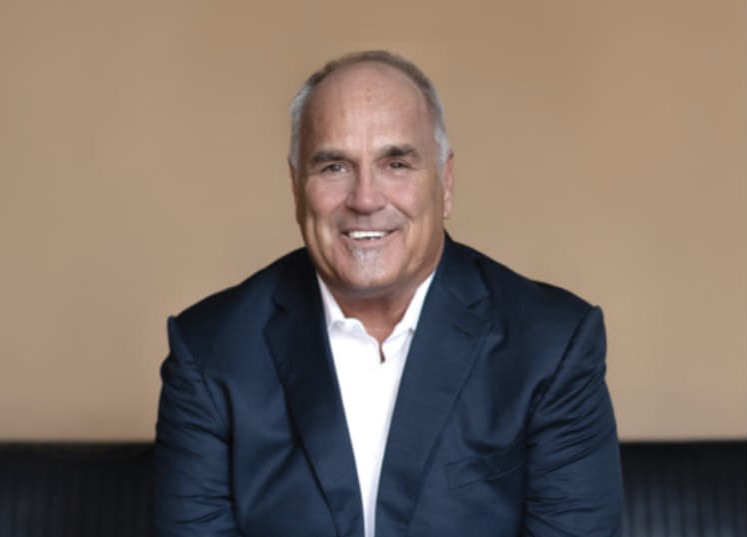
Bob Thomas
Advisor · supply chain and distribution
Bob Thomas has spent more than 40 years in health and fitness. He founded Sports and Fitness, a chain of clubs on the West Coast in the 1980s and 90s, then joined the fledgling Lifetime Fitness as lead executive of sales and operations, where he helped take it from six clubs to 120.
Today he leads NexGen MD Scientific, a longevity medicine supply chain and telehealth platform that delivers peptides, GLP-1s, and hormone therapies to gyms, med spas, and clinics nationwide.
He advises us on how peptides actually reach patients, which is the part members rarely get to see: who compounded the vial, who shipped it, and what stands behind it. Knowing how that chain works is what lets us describe it to members accurately.
Commercial interest: CEO of NexGen MD Scientific, a supplier in this category. NexGen buys no placement here; sponsorship is sold separately, at flat rates, and cannot buy clinical placement.
What we are working toward
Getting paid less by the people we refer you to.
Referral compensation is the one revenue line with a conflict baked in: we earn it when you become someone’s patient. Member dues and flat-fee sponsorships are not paid per patient, and those are the two we are deliberately growing.
That is a mix, not a slogan, which means it is something you can actually hold us to. When it changes, it will change on the revenue page, not in a press release.
Where to start
If you want to know whether peptide therapy suits you, the intake is the front door. A licensed clinician evaluates you and decides what, if anything, to prescribe, including that it may not suit you at all.
Clinicians and pharmacies: partner with the Association
Disclaimer
The Peptide Association publishes education and routes members to licensed clinicians. We do not prescribe, dispense, or sell peptides. Nothing on this site is medical advice, and every clinical decision is made by a licensed provider who has evaluated you.